
Recognising and Responding Quickly
First Aid for Dehydration
Key Takeaway: Sip, don’t gulp when dehydrated and make sure to know when you need to contact emergency services.

Picture This
Picture this: you’re out hiking on a hot day, enjoying the scenic trails, and suddenly, you feel dizzy, your mouth feels unusually dry, and you notice your headache intensifying. Dehydration might be sneaking up on you. It’s common, surprisingly easy to overlook, and can become serious very quickly. Understanding what dehydration is and how to spot its early signs can be the difference between a mild inconvenience and a critical health emergency.
In this guide, we’ll explore what dehydration really means, how it happens, the symptoms you should look out for, and why immediate response matters. Think of this as your go-to manual for handling dehydration effectively and confidently—because dehydration isn’t just a summer nuisance; it’s a potential health risk all year round.

Table of Contents
What is Dehydration?
Dehydration occurs when your body loses more fluids than it takes in, disrupting the delicate balance of minerals and electrolytes essential for everyday bodily functions. Your body is roughly 60% water, and even minor fluid loss can significantly impact your physical and cognitive performance.
But why does dehydration occur? Common scenarios include intense exercise, particularly in hot or humid conditions, prolonged exposure to heat, or illnesses that involve fever, vomiting, or diarrhea. Simply put, if your body uses or loses more fluid than you’re replenishing, you’re headed towards dehydration.
Every day, your body loses fluids through basic activities like breathing, sweating, urinating, and even digesting food. Normally, this lost fluid is replaced when you drink water or consume foods containing water. Problems arise when your fluid loss increases—perhaps due to excessive sweating on a hot day or prolonged physical exertion—and you fail to adequately replace those fluids.
Dehydration isn’t just about losing water. Alongside fluids, your body loses important electrolytes—minerals like sodium, potassium, and magnesium. These minerals are vital for muscle function, nerve signaling, and maintaining the proper balance of fluids inside and outside your cells. Losing electrolytes disrupts these critical functions, potentially causing symptoms from minor discomfort to severe health issues.
Certain groups are especially susceptible to dehydration:
People with chronic illnesses or on certain medications may also be at greater risk.
Young children and infants, who have a higher surface area to volume ratio, lose fluids rapidly and may not communicate their thirst clearly.
Elderly individuals typically have reduced fluid reserves, and their sense of thirst is often diminished, making them more vulnerable.
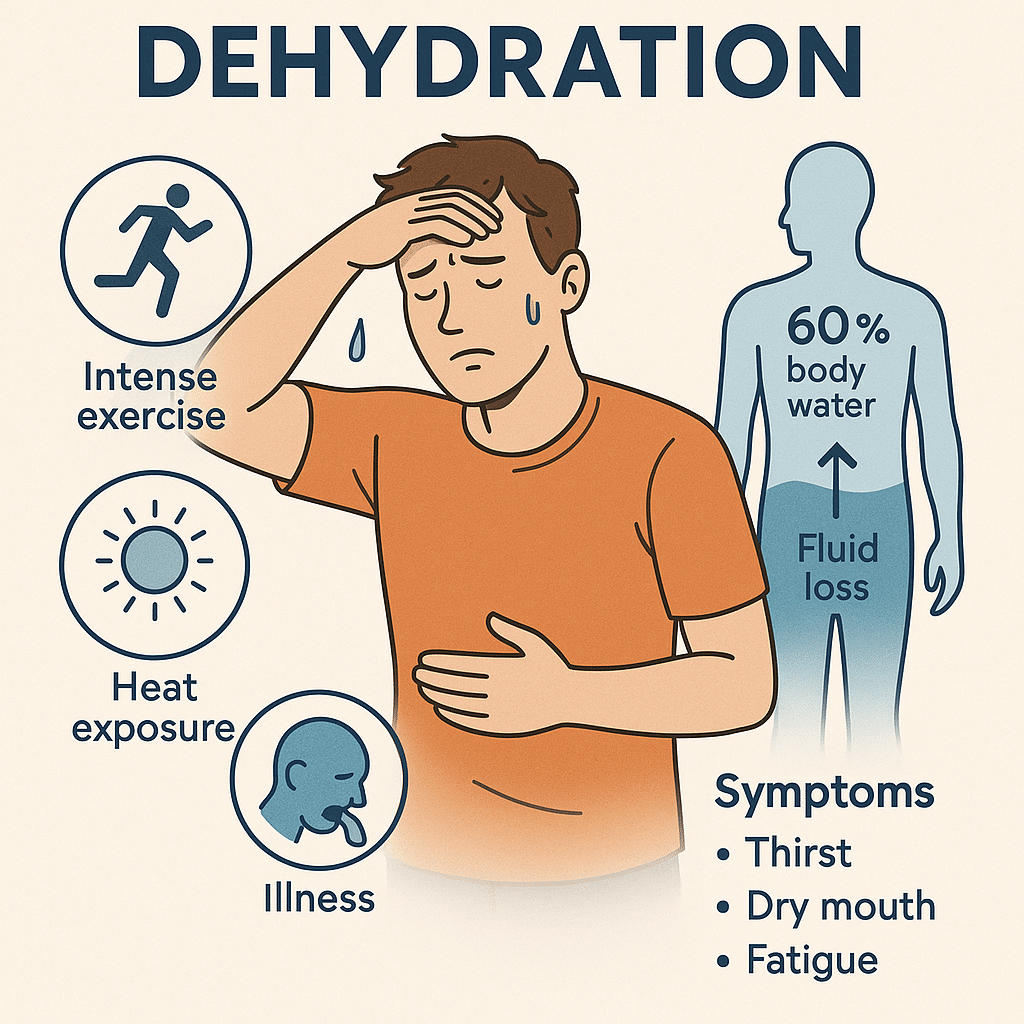
Recognising Dehydration: Signs and Symptoms
Knowing the signs and symptoms of dehydration can make all the difference. Dehydration symptoms range from subtle cues you might overlook to severe warnings demanding immediate medical attention. Let’s break down what you should be watching for at each stage.
Mild to Moderate Dehydration Symptoms
In mild to moderate cases, your body tries to alert you with manageable but clear signs:
- Thirst and Dry Mouth: Thirst is the most obvious indicator your body needs water. However, don’t rely solely on thirst, as by the time you’re thirsty, dehydration has already begun.
- Darker-Coloured Urine: One of the easiest ways to check hydration is by urine colour. Ideally, it should be pale yellow; dark yellow or amber indicates dehydration.
- Headaches and Dizziness: Early fluid loss can lead to headaches and feelings of dizziness or light-headedness. Your brain requires optimal hydration to function correctly.
- Fatigue: Feeling unusually tired or sluggish could also indicate early dehydration. Water plays a crucial role in energy metabolism, and inadequate hydration can sap your strength.
- Muscle Cramps: Electrolytes lost through sweat are crucial for muscle function. Reduced levels can trigger muscle cramps or spasms.
These mild symptoms might seem inconvenient but manageable. However, neglecting them can quickly escalate into more serious issues.
Severe Dehydration Symptoms
As dehydration progresses, the body’s symptoms become more severe, serving as urgent warnings:
Loss of Consciousness or Fainting: Severe dehydration can lead to fainting or loss of consciousness, indicating a medical emergency requiring immediate intervention.
Rapid Heartbeat and Breathing: When dehydrated, your heart must work harder to maintain adequate circulation. You might notice your heart racing or breathing becoming quicker and shallower.
Confusion or Irritability: Dehydration impacts brain function, leading to confusion, irritability, or difficulty concentrating. These cognitive disruptions are serious indicators of advanced fluid loss.
Sunken Eyes or Pale Skin: Particularly noticeable in young children and infants, sunken eyes, pale or mottled skin, and reduced skin elasticity are clear visual signs of severe dehydration.
Lack of Sweating: In hot environments, not sweating could indicate severe dehydration. This is a critical sign because it means your body has lost its primary cooling mechanism.
Special Considerations for Infants, Young Children, and Elderly
Special attention must be paid to vulnerable groups like infants, young children, and the elderly, whose symptoms can differ slightly or may escalate more quickly.
In infants and young children, watch for:
- Dry nappies (fewer wet nappies than usual)
- No tears when crying
- Sunken soft spots on the skull
- Irritability and unusual lethargy
For elderly individuals, keep an eye out for:
- Sudden onset of confusion or disorientation
- Lowered blood pressure
- Noticeably decreased urine output
- Difficulty with balance and coordination
Prompt recognition and action when noticing these signs can significantly impact recovery speed and effectiveness, reducing risks of complications such as kidney damage, seizures, or heat stroke.
Understanding dehydration’s subtle (and not-so-subtle) symptoms is your first line of defense. With these signs in mind, you’re better equipped to recognize early indicators, preventing mild dehydration from escalating into a potentially dangerous medical emergency.
In the next sections, we’ll explore exactly how to respond effectively when you or someone around you shows signs of dehydration, from immediate first aid steps to when professional medical intervention becomes essential.
Shock isn’t just about being scared—it’s a serious medical condition. After a fall, keep the person comfortable and warm (blankets, jackets, whatever you’ve got handy). Encourage calm, controlled breathing and reassure them help is on the way.

Importance of Immediate Medical Attention in Severe Cases
Severe dehydration can rapidly escalate into serious conditions like kidney failure, heatstroke, or hypovolemic shock (dangerously low blood volume). Prompt professional care is crucial to prevent permanent organ damage or other severe outcomes.
First Aid for Dehydration
Taking immediate action when you spot signs of dehydration is critical. Here’s how to provide effective first aid:
Move to a Cool, Shaded Area and Rest
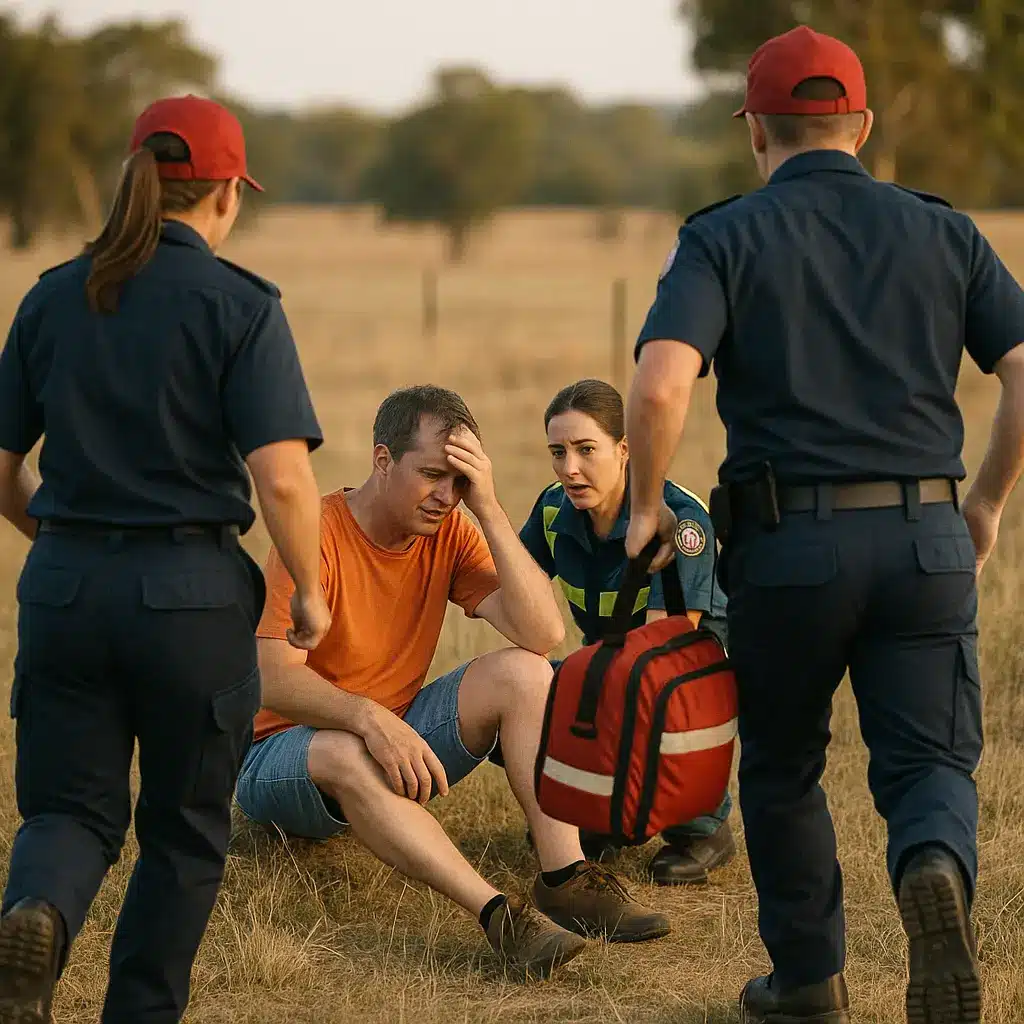
The first and most crucial step is relocating to a cool, shaded area. Heat can exacerbate dehydration, so finding a cooler environment helps your body recover more quickly. Sit or lie down and rest, avoiding unnecessary movements to reduce fluid loss.
Offer Fluids (Water or Oral Rehydration Solutions)
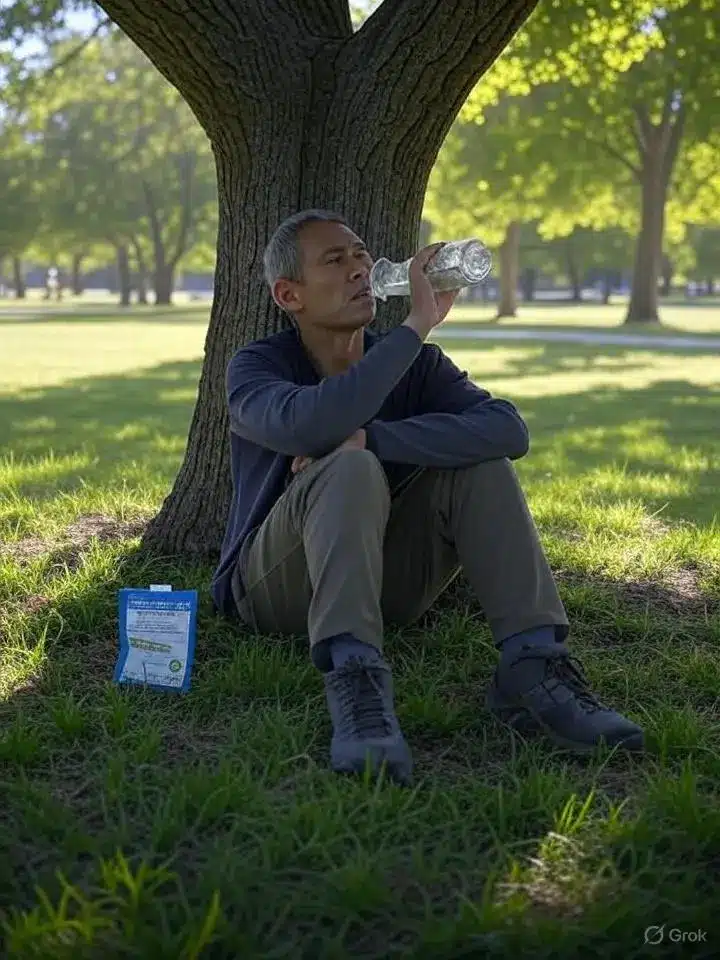
Begin rehydration by drinking water or, oral rehydration solutions (ORS). Water alone helps replace lost fluids, but ORS, which contain precise levels of salts and sugars, restore electrolyte balance as well. Sip slowly rather than gulping, which helps the body absorb fluids more effectively and reduces the chance of nausea or vomiting.
Avoid Alcohol, Caffeine, and Sugary Drinks
Steer clear of drinks containing alcohol, caffeine, or excessive sugar, as these can further dehydrate you. Alcohol and caffeine increase urine output, making dehydration worse, while sugary drinks can draw water away from cells, impeding effective hydration.
Role of IV Fluids Administered by Healthcare Professionals
In severe cases, intravenous (IV) hydration is essential. IV fluids deliver hydration directly into the bloodstream, rapidly restoring fluid balance and electrolyte levels, and providing immediate relief and stabilisation. This procedure must be performed by trained healthcare professionals to safely monitor and manage the patient’s response.
When to Seek Emergency Medical Care
Recognising when dehydration requires urgent medical intervention can save lives.
Indicators for Severe Dehydration
Seek immediate medical help if any of these severe symptoms appear:
Extreme fatigue, inability to stand or walk comfortably
Persistent confusion or disorientation
Rapid heart rate or breathing that doesn’t normalise after rest and fluids
Loss of consciousness or fainting episodes
Inability to retain fluids due to vomiting or severe diarrhoea
Young Children
Infants and young children lose fluids quickly and may not clearly communicate their thirst. Watch closely for:
- Sunken fontanelle (soft spot on top of the head)
- Reduced urine output (fewer wet nappies)
- Tearless crying and dry mouth
- Unusual lethargy or irritability
Elderly
Older adults have diminished thirst sensations, reduced bodily water reserves, and may experience mobility issues that prevent easy access to fluids. Be alert for:
- Sudden confusion or dizziness
- Low urine output or darker urine
- Noticeable drop in blood pressure or unexplained fatigue
- Chronic conditions or medications that increase urination or reduce fluid intake
Regularly reminding elderly individuals to drink fluids, especially during hot weather, can help prevent dehydration.
Role of IV Fluids Administered by Healthcare Professionals
In severe cases, intravenous (IV) hydration is essential. IV fluids deliver hydration directly into the bloodstream, rapidly restoring fluid balance and electrolyte levels, and providing immediate relief and stabilisation. This procedure must be performed by trained healthcare professionals to safely monitor and manage the patient’s response.
Prevention Tips to Stay Hydrated
Preventing dehydration is simpler than managing it. Here are some practical tips:
Importance of Regular Fluid Intake
Regular, consistent intake of water throughout the day is vital. Don’t rely solely on thirst as an indicator—thirst often signals mild dehydration already underway. Aim for at least 2 litres daily, adjusting upward in hot weather or during physical activity.
Foods Rich in Water
Include hydrating foods in your diet such as:
- Fruits: watermelon, oranges, berries, peaches
- Vegetables: cucumbers, lettuce, celery, tomatoes
- Soups and broths which provide hydration and electrolytes simultaneously
Hydration Strategies During Exercise or Hot Weather
When active or exposed to high temperatures:
- Drink water before, during, and after activity.
- Use electrolyte-enhanced sports drinks if engaging in prolonged or vigorous exercise.
- Take regular breaks to rest in shaded or air-conditioned environments.
- Wear loose, breathable clothing to minimise fluid loss through excessive sweating.
Taking these steps can significantly reduce your risk of dehydration, keeping you safe, healthy, and energised, regardless of your environment or activity level.
Need A First Aid Course?

Supplies to Consider
When dehydration strikes, being prepared can make all the difference. Here’s what you should always have on hand:
- Electrolyte Sachets or Oral Rehydration Salts (ORS):
Compact and easy to store, these sachets quickly replenish lost fluids and essential minerals. - Hydration Tablets:
Easy-to-use effervescent tablets you can drop into water bottles. These are perfect for hiking, sports, or workplaces. - Cold Packs:
Instant or reusable cold packs help cool down body temperature rapidly, particularly useful in hot climates or during heat-related emergencies.
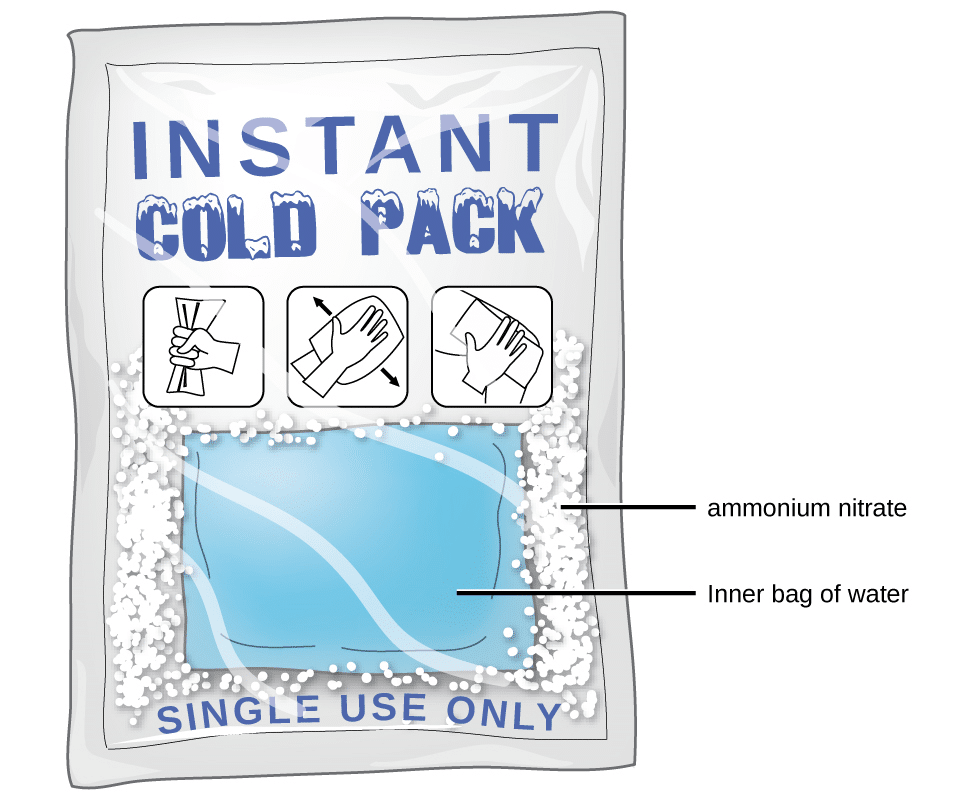
Why Keeping Supplies Handy Matters:
Dehydration can escalate rapidly, especially during outdoor activities, in hot environments, or physically demanding workplaces. Having these supplies readily available means quicker treatment, less risk of complications, and a faster recovery, keeping everyone safer.
Frequently Asked Questions
Can dehydration cause serious complications?
Yes. If left untreated, dehydration can cause severe complications like kidney failure, heat stroke, seizures, and even hypovolemic shock (dangerously low blood pressure due to fluid loss).
How quickly can dehydration happen?
Dehydration can occur quickly—sometimes within just a couple of hours—especially during intense physical activity, illness involving vomiting or diarrhoea, or exposure to hot, humid conditions.
Are sports drinks better than water for rehydration?
Sports drinks are beneficial if dehydration is caused by intense physical activity or prolonged sweating because they help replenish electrolytes lost in sweat. However, for mild hydration or day-to-day use, water typically does the job just as well more vulnerable.
Need A First Aid Course?
Make A Difference

Understanding first aid for dehydration matters. Acting swiftly when dehydration occurs can significantly impact the health outcomes of yourself and those around you.
Ready to elevate your first aid skills?
At My First Aid Course Brisbane, we provide hands-on, comprehensive first aid training that prepares you for real-world scenarios, including dehydration emergencies.
Contact us today to learn more or book a HLTAID011 Provide First Aid course. Your readiness could make all the difference in an emergency!
Onsite Workplace
Group Bookings

Nationally recognised certificates
30 years of professional training
Sessions tailored for your group

Public
Bookings
Nationally recognised certificates

30 years of professional training
6 locations Brisbane-wide


